Eye Care for Children
Children rarely tell you they can't see clearly. They just quietly adapt.
A child who squints at the board, holds books too close, or complains of headaches after reading isn't being fussy. They're showing you that something needs attention. The earlier we find it, the easier it is to correct — and the less it will affect their learning, confidence, and development.
Stereoscopy, lazy eye and binocular vision cannot be corrected fully after a certain age, hence the emphasis on early and regular preschool check ups.
Conditions We See
Refractive Errors
Myopia (short-sightedness), hypermetropia (long-sightedness), and astigmatism. All correctable with glasses or contact lenses, and best managed early before amblyopia sets in.
Amblyopia (Lazy Eye)
One eye is weaker and the brain begins to ignore poor quality images from the bad eye. After a certain age, the brain's plasticity reduces and treatment becomes harder. Early detection is critical — treatment is simply patching the stronger eye to allow the weaker one to develop.
Squint (Strabismus)
Eyes that don't align properly. Can cause amblyopia if untreated. Treatment includes glasses, patching, eye exercises, and sometimes surgery.
Congenital Cataracts
Present from birth. Must be addressed promptly to allow normal visual development.
Blocked Tear Ducts
Common in infants. Often resolves on its own; we guide parents on massage technique and monitor progress.
How We Work With Children
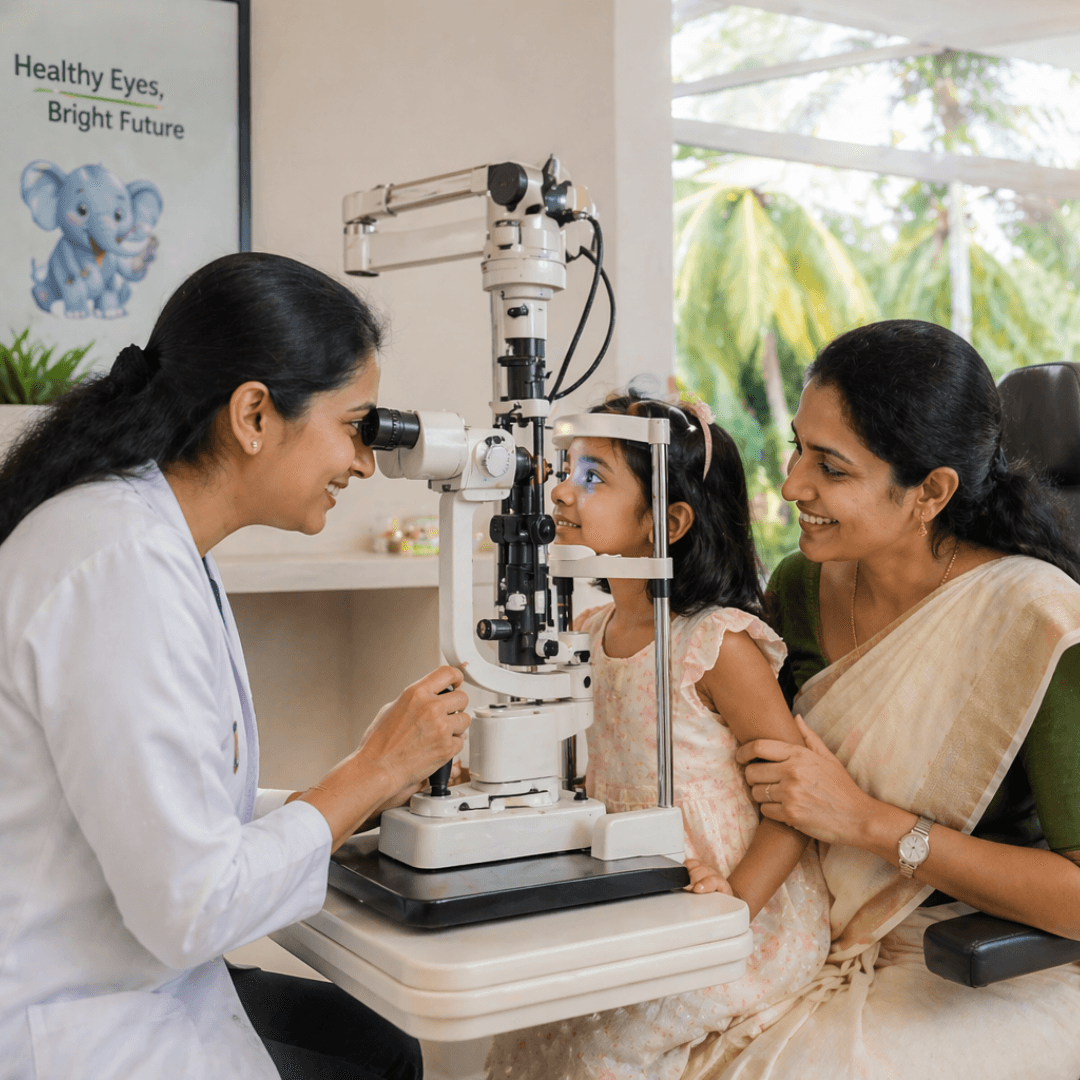
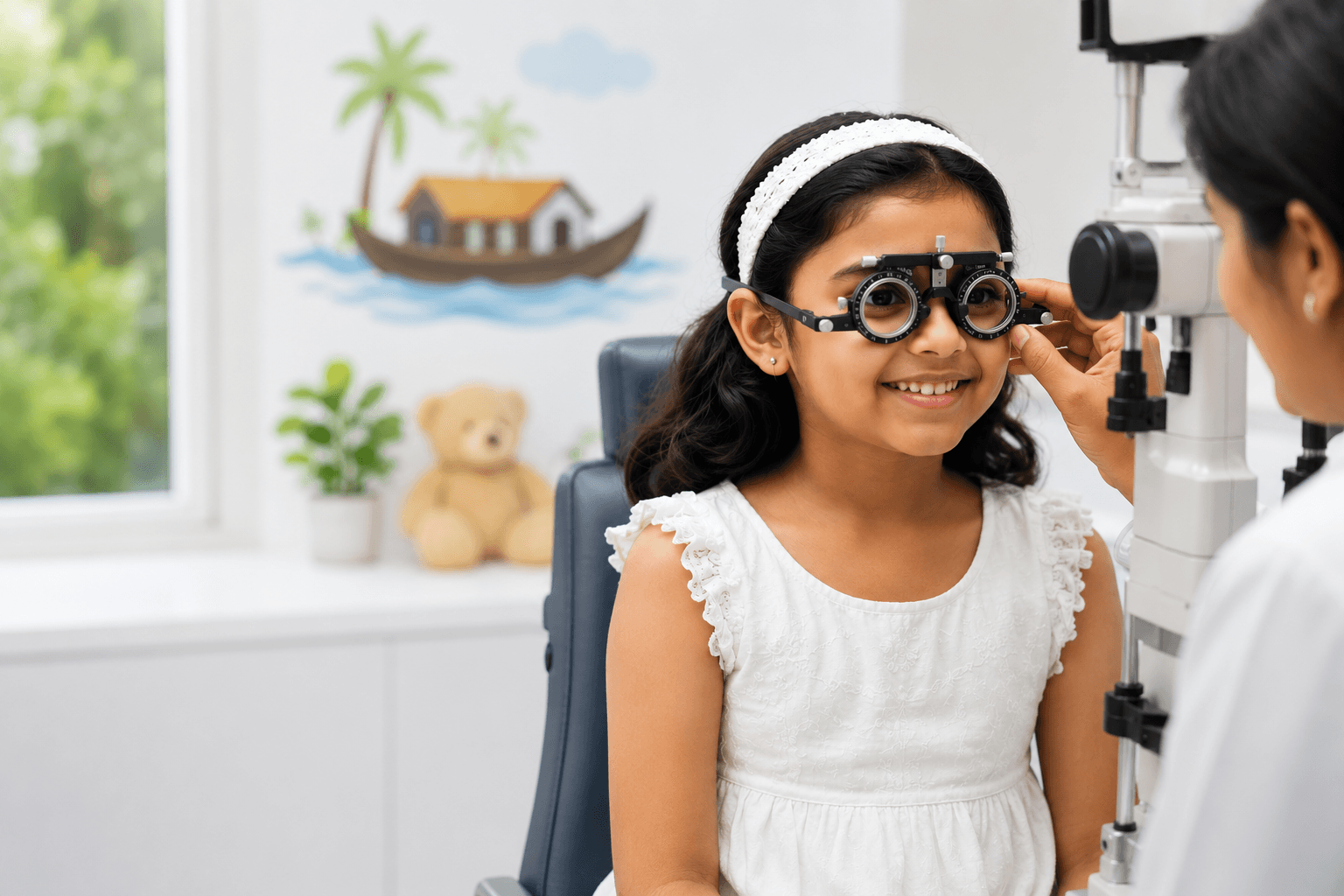
We don't rush. We use age-appropriate tests — picture charts, games, and handheld equipment — so children are relaxed and the results are accurate. Parents are always present and always informed. We explain everything in plain language, including what to watch for at home between visits.
The first eye check-up should happen before age 3. Earlier if there is a family history of squint, lazy eye, or high glass power.
Ready to take the next step? Call us — we will help you find the right appointment.
Book a Child's Eye Check-up